

Which Climbing Toy is Safest for a 2-Year-Old? Expert Guide for Confident Climbers
Your two-year-old has discovered they can climb—and they want to climb EVERYTHING. From kitchen chairs to playground equipment, their newfound confidence and abilities have transformed them into a determined little mountaineer. While this developmental leap is exciting, it also brings new safety considerations as their ambitions often outpace their abilities.
At two years old, children possess significantly more strength, coordination, and confidence than they did just months earlier. This combination of increased capability and fearless enthusiasm creates unique safety challenges that require climbing equipment specifically designed for this dynamic developmental stage.
So what makes a climbing toy truly safe for a confident, capable, yet still developing 2-year-old? Let’s explore the critical factors that ensure your little adventurer can explore their climbing passion safely.
Understanding Your 2-Year-Old’s Climbing Revolution
Dramatic Developmental Advances
The difference between a 1-year-old and 2-year-old climber is remarkable:
Physical Capabilities at 24 Months:
- Confident walking: Steady, coordinated movement on flat surfaces
- Running ability: Beginning to run with improved balance control
- Jumping skills: Two-foot jumps and landing coordination
- Climbing confidence: Attempting vertical challenges with determination
- Improved strength: Significantly stronger grip and leg power
- Better balance: Can stand on one foot briefly and navigate uneven surfaces
Cognitive Development:
- Spatial reasoning: Better understanding of height, distance, and positioning
- Cause and effect: Clear understanding of climbing consequences
- Problem-solving: Planning routes and figuring out climbing strategies
- Memory skills: Remembering successful climbing techniques
- Risk assessment: Beginning to evaluate challenges before attempting
Emotional and Social Changes:
- Independence assertion: Strong desire to do things without help
- Confidence building: Pride in physical accomplishments
- Frustration management: Learning to handle climbing failures
- Social awareness: Interest in climbing with other children
- Achievement motivation: Driven to reach higher and accomplish more
The 2-Year-Old Safety Challenge
This developmental stage creates unique safety considerations:
Overconfidence Risks:
- Ability overestimation: Thinking they can do more than they safely can
- Height miscalculation: Difficulty judging dangerous heights
- Impulse control: Acting before thinking through consequences
- Attention wandering: Getting distracted while in potentially dangerous positions
Increased Capability Needs:
- More complex challenges: Simple climbing becomes too easy
- Height progression: Need for gradually increasing elevation challenges
- Variety requirements: Boredom with repetitive climbing experiences
- Social climbing: Desire to climb with friends and siblings
Critical Safety Features for 2-Year-Old Climbing Equipment
Enhanced Structural Requirements
Appropriate Height Progression:
- Graduated challenge: 30-42 inches maximum height for 2-year-olds
- Multiple height options: Various levels to practice different skills
- Escape route accessibility: Easy ways to get down safely at any point
- Progressive difficulty: Natural advancement from simple to complex
Advanced Stability Features:
- Heavier construction: More substantial weight to handle energetic climbing
- Lower center of gravity: Design that prevents tipping with dynamic movement
- Enhanced base width: Broader foundation for increased stability
- Dynamic load handling: Ability to handle sudden weight shifts and movements
2-Year-Old Specific Design Elements:
- Rung optimization: 7-9 inch spacing perfect for longer limbs
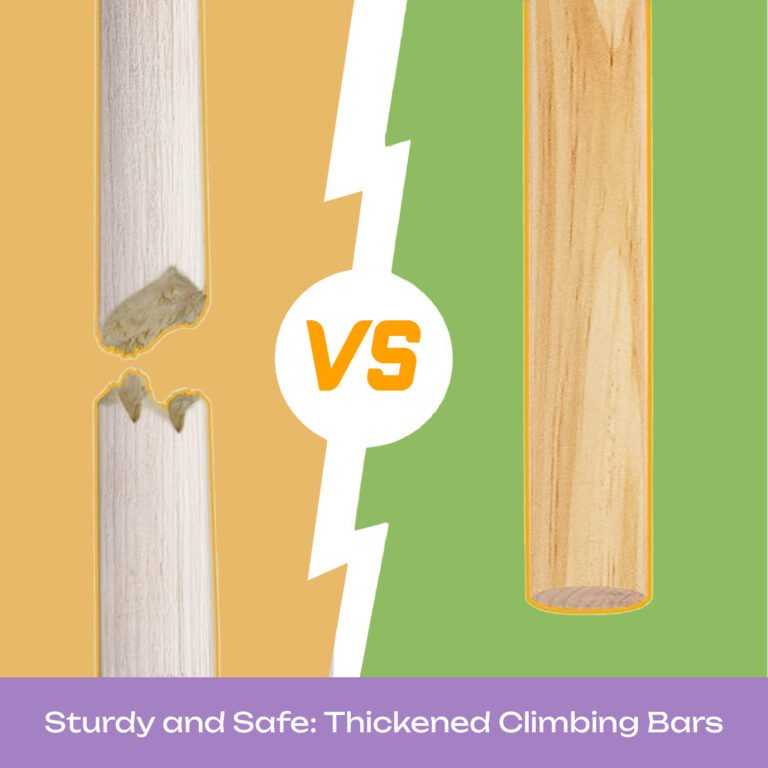
- Grip accommodation: Rung thickness appropriate for stronger, larger hands
- Weight capacity: 50+ pounds to accommodate growing children
- Durability enhancement: Construction to handle more vigorous use
Safety Features for Increased Confidence
Fall Protection:
- Manageable fall distances: Heights that allow safe landing even if child slips
- Rounded construction: No sharp edges or corners anywhere on structure
- Smooth transitions: Seamless connections between climbing elements
- Impact absorption: Materials and design that absorb climbing stresses
Behavioral Safety Support:
- Self-limiting design: Structure naturally prevents overreaching
- Visual safety cues: Clear indicators of safe vs. challenging areas
- Intuitive use patterns: Design that encourages safe climbing behaviors
- Progressive challenge: Natural advancement that builds skills safely
Evaluating Climbing Toy Options for 2-Year-Olds
Basic Playground Equipment
Pros:
✅ Familiar from park experiences
✅ Often designed for outdoor use
✅ Multiple children can use simultaneously
Cons:
❌ Usually designed for older children (3-5 years)
❌ Heights often inappropriate for 2-year-olds
❌ Limited supervision capability in home settings
❌ Often made with harder materials increasing injury risk
❌ May encourage overconfident behavior
Safety Concerns for 2-Year-Olds:
- Excessive heights leading to serious fall injuries
- Age-inappropriate challenges causing overreaching
- Hard surfaces and materials increasing impact injuries
- Design that doesn’t accommodate 2-year-old proportions
Indoor Climbing Domes
Pros:
✅ Multiple climbing angles and approaches
✅ Often appropriate height for toddlers
✅ Interesting geometric challenges
Cons:
❌ Often made of plastic with potential sharp edges
❌ May lack stability for enthusiastic climbers
❌ Limited longevity as child grows
❌ Can tip if not properly weighted
Safety Concerns for 2-Year-Olds:
- Potential tipping with dynamic climbing movements
- Sharp plastic edges from manufacturing processes
- Inadequate stability for confident 2-year-old climbing
- Limited challenge progression as skills develop
Soft Play Climbing Sets
Pros:
✅ Soft materials reduce injury risk
✅ Often designed specifically for toddlers
✅ Lightweight and reconfigurable
Cons:
❌ May not provide realistic climbing experience
❌ Often compress and lose structure quickly
❌ Limited challenge for developing skills
❌ May not support transition to real climbing equipment
Safety Concerns for 2-Year-Olds:
- Insufficient structural integrity for confident climbers
- False sense of safety that doesn’t transfer to real climbing
- Rapid deterioration leading to potential safety hazards
- Inadequate challenge for skill development
Wooden Climbing Triangles (Pikler Triangles)
Pros:
✅ Perfect height progression for 2-year-olds
✅ Excellent stability and durability
✅ Natural materials safe for extended contact
✅ Grows with child’s developing abilities
✅ Proven safety record across generations
✅ Self-limiting design prevents overreaching
Why They Excel for 2-Year-Olds:
- Ideal height range: Challenging but not dangerous for this age group
- Progressive difficulty: Natural advancement as skills develop
- Superior stability: Triangle geometry provides inherent safety
- Quality construction: Built to handle enthusiastic 2-year-old energy
- Long-term value: Continues to engage children for years
Why Pikler Triangles Are the Gold Standard for 2-Year-Old Safety
Perfect Developmental Match
Height Sweet Spot:
At 30-36 inches, quality Pikler triangles provide the perfect challenge level for 2-year-olds:
- Challenging enough: Requires effort and skill development
- Safe enough: Fall distances that won’t cause serious injury
- Progressive: Can start with lower rungs and work up
- Confidence building: Success achievable with effort and practice
Skill Development Support:
- Bilateral coordination: Using arms and legs together in complex patterns
- Spatial reasoning: Planning climbing routes and understanding positioning
- Risk assessment: Learning to evaluate challenges appropriately
- Problem-solving: Figuring out how to navigate obstacles safely
Superior Safety Engineering
Inherent Stability:
- Triangle geometry: Mathematically stable shape that won’t tip
- Wide base design: Broader foundation than child’s climbing movements
- Low center of gravity: Weight distribution that maintains stability
- Quality materials: Substantial construction that handles dynamic loads
Age-Appropriate Features:
- Rung spacing: Optimized for 2-year-old hand and foot placement
- Surface texture: Appropriate grip without being rough or abrasive
- No pinch points: Design eliminates finger-catching opportunities
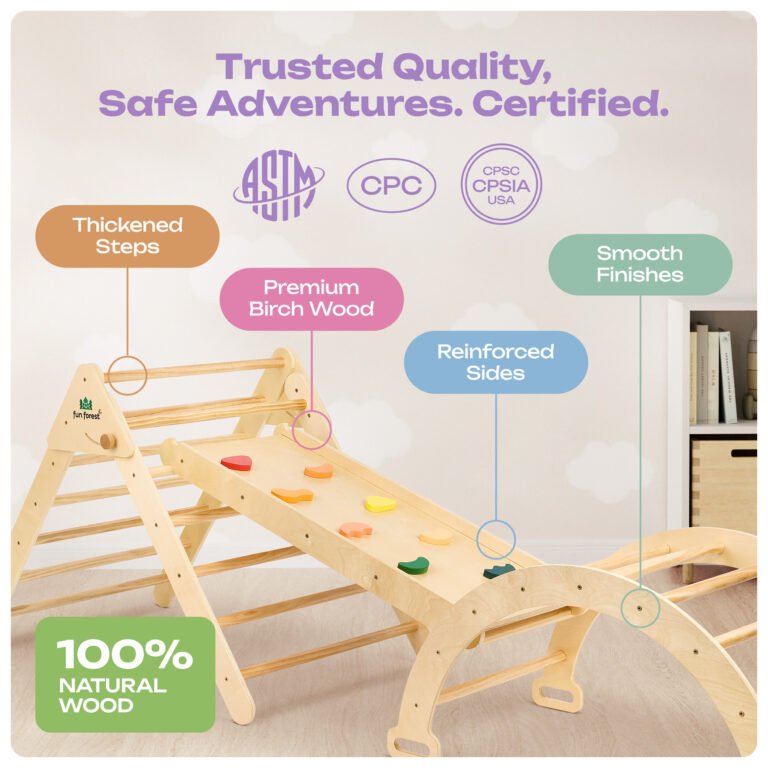
- Smooth finish: Hand-sanded surfaces prevent splinters and scrapes
Behavioral Safety Benefits
Self-Regulation Support:
- Natural limits: Design prevents attempts beyond safe capability
- Gradual progression: Encourages step-by-step skill building
- Success orientation: Structure promotes achievable challenges
- Confidence building: Regular success builds appropriate risk assessment
Parent Peace of Mind:
- Predictable use patterns: Design encourages safe climbing behaviors
- Supervision friendly: Easy to monitor child’s climbing activities
- Quality assurance: Built to last and maintain safety over time
- Proven track record: Decades of safe use by families worldwide
Special Considerations for 2-Year-Old Climbers
Supervision Strategies
Active Supervision Guidelines:
- Proximity adjustment: Stay close enough to assist but far enough to allow independence
- Environmental scanning: Regularly check for new hazards or changes
- Energy monitoring: Watch for fatigue that could lead to accidents
- Skill assessment: Continuously evaluate child’s growing capabilities
Teaching Safety:
- Demonstrate techniques: Show proper hand and foot placement
- Practice getting down: Ensure child knows how to descend safely
- Discuss height limits: Help child understand appropriate challenge levels
- Model risk assessment: Think aloud about climbing decisions
Environmental Setup for 2-Year-Olds
Enhanced Safety Zones:
- Softer landing areas: Thicker mats or carpeting for higher climbing
- Increased clearance: 4-5 feet of open space around climbing equipment
- Hazard elimination: Remove or cushion nearby furniture edges
- Lighting optimization: Ensure excellent visibility for safe climbing
Engagement Enhancement:
- Climbing accessories: Safe props that add variety to climbing experiences
- Seasonal adaptations: Indoor/outdoor setup options for year-round use
- Social accommodations: Space for friends and siblings to climb together
- Storage solutions: Easy access to equipment for regular use
The Fun Forest Advantage for 2-Year-Old Safety
When choosing climbing equipment for your adventurous 2-year-old, the Fun Forest collection provides the perfect balance of challenge and safety:
🌲 Fun Forest Pikler Triangle
Engineered for 2-Year-Old Success:
🎯 Perfect Challenge Level: 32-inch height provides ideal difficulty progression
🛡️ Enhanced Stability: Wide triangle base handles energetic 2-year-old climbing
🌿 Premium Safety Materials: Real wood construction eliminates toxic exposure concerns
📏 Optimized Sizing: Rung spacing and thickness perfect for 2-year-old proportions
✨ Smooth Finish: Hand-sanded surfaces ensure splinter-free climbing experiences
🏆 Quality Engineering: Built to support growing children safely for years
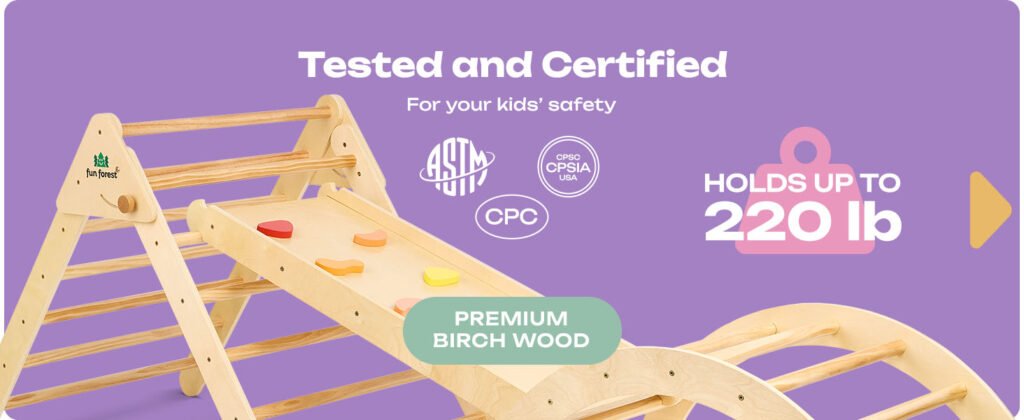
Safety Certifications for 2-Year-Olds:
- ASTM F963 compliance verified for 18+ month age group
- Weight capacity tested to 75+ pounds
- Structural integrity verified through dynamic load testing
- Non-toxic finish certification safe for extended contact
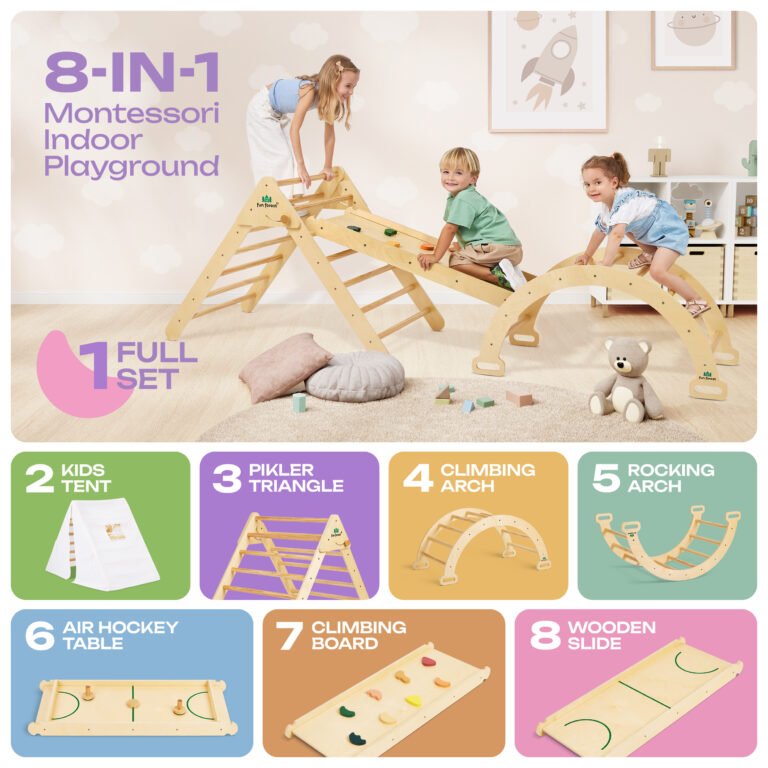
🎯 Complete Fun Forest Pikler Set
Ultimate Safety and Variety for Active 2-Year-Olds:
🏰 Multiple Challenge Levels: Various configurations accommodate different skill levels
🧗 Progressive Difficulty: Natural advancement from simple to complex challenges
🎪 Enhanced Engagement: Multiple components prevent boredom and maintain interest
👨👩👧👦 Family Adaptability: Components work for children of various ages simultaneously
🔧 Secure Integration: All components tested together for comprehensive safety
📈 Growth Support: Configurations that evolve with rapid 2-year-old development
Why Complete Sets Excel for 2-Year-Olds:
Variety for Active Minds:
- Multiple configurations: Prevents boredom with single setup
- Progressive challenges: Natural advancement as skills develop rapidly
- Social climbing: Multiple children can use different components simultaneously
- Creative integration: Components combine for enhanced imaginative play
Safety Through Engagement:
- Sustained interest: Variety maintains engagement longer, reducing unsafe improvisation
- Appropriate challenges: Multiple difficulty levels prevent overreaching
- Escape options: Multiple ways to get down safely from various positions
- Parent confidence: More options provide better supervision and safety management
Age-Specific Safety Guidelines for 2-Year-Olds
Daily Use Recommendations
Session Management:
- Duration awareness: 15-20 minute climbing sessions with breaks
- Energy assessment: Use during alert, energetic periods
- Fatigue prevention: Stop before child becomes overly tired
- Regular variety: Rotate configurations to maintain engagement
Skill Development Support:
- Progressive challenges: Gradually increase difficulty as abilities grow
- Success reinforcement: Celebrate achievements to build confidence
- Safety reminders: Consistent reinforcement of safe climbing practices
- Independence balance: Support autonomy while maintaining safety
Warning Signs to Watch For
Safety Red Flags:
❌ Overconfident attempts: Trying to climb beyond safe capability
❌ Fatigue indicators: Increased clumsiness or poor decision-making
❌ Distraction climbing: Attempting to climb while not focused
❌ Showing off behaviors: Climbing to impress others rather than for personal challenge
❌ Equipment modifications: Attempting to change or adjust climbing structure
Intervention Strategies:
- Redirect energy: Offer alternative physical activities when climbing becomes unsafe
- Teaching moments: Use near-misses as opportunities to discuss safety
- Environment modification: Adjust setup if child consistently overreaches
- Break time: Implement rest periods when energy becomes unfocused
Investment Considerations for 2-Year-Old Families
Safety vs. Cost Analysis
Quality Investment Benefits:
- Enhanced safety: Premium construction provides better protection
- Longevity: Quality equipment grows with child and serves multiple children
- Peace of mind: Proven safety reduces parental anxiety
- Skill development: Appropriate challenges support optimal development
Hidden Costs of Cheap Alternatives:
- Replacement frequency: Poor quality equipment requires frequent replacement
- Safety risks: Potential medical costs from equipment-related injuries
- Development delays: Inappropriate equipment may hinder skill development
- Stress costs: Constant worry about safety affects family enjoyment
Growth Planning for 2-Year-Olds
Developmental Trajectory:
- Rapid skill advancement: 2-year-olds develop climbing skills very quickly
- Increasing complexity needs: Simple equipment becomes inadequate rapidly
- Social climbing emergence: Interest in climbing with others develops
- Creative integration: Beginning to incorporate climbing into imaginative play
Equipment Longevity:
- Multi-year use: Quality Pikler triangles engage children through age 6+
- Sibling potential: Durable construction serves multiple children
- Resale value: Premium equipment maintains value for future families
- Space efficiency: Equipment that grows with child maximizes space investment
Building Confident, Safe Climbers
The goal isn’t to eliminate risk from your 2-year-old’s climbing experiences—it’s to provide appropriate, manageable challenges that build genuine competence and confidence. The safest climbing toy for a 2-year-old is one that:
Matches Their Abilities:
- Provides appropriate challenge without overwhelming
- Supports natural skill progression
- Builds on existing capabilities
- Encourages continued development
Supports Their Development:
- Enhances physical strength and coordination
- Builds spatial reasoning and problem-solving skills
- Develops appropriate risk assessment abilities
- Fosters independence and confidence
Grows With Them:
- Continues to engage as abilities advance
- Provides new challenges as skills develop
- Maintains safety through growth spurts
- Adapts to changing interests and capabilities
Your 2-Year-Old’s Safe Climbing Journey
Two-year-olds are remarkable little athletes with impressive capabilities and endless enthusiasm. They deserve climbing equipment that honors their abilities while respecting their developmental limitations—equipment that challenges them appropriately while keeping them genuinely safe.
Ready to support your 2-year-old’s climbing adventures with the safest possible equipment?
🌟 **[Choose the Fun Forest Pikler Triangle](https://www.amazon.com/dp/B0
Learn more in our complete Pikler Triangle guide